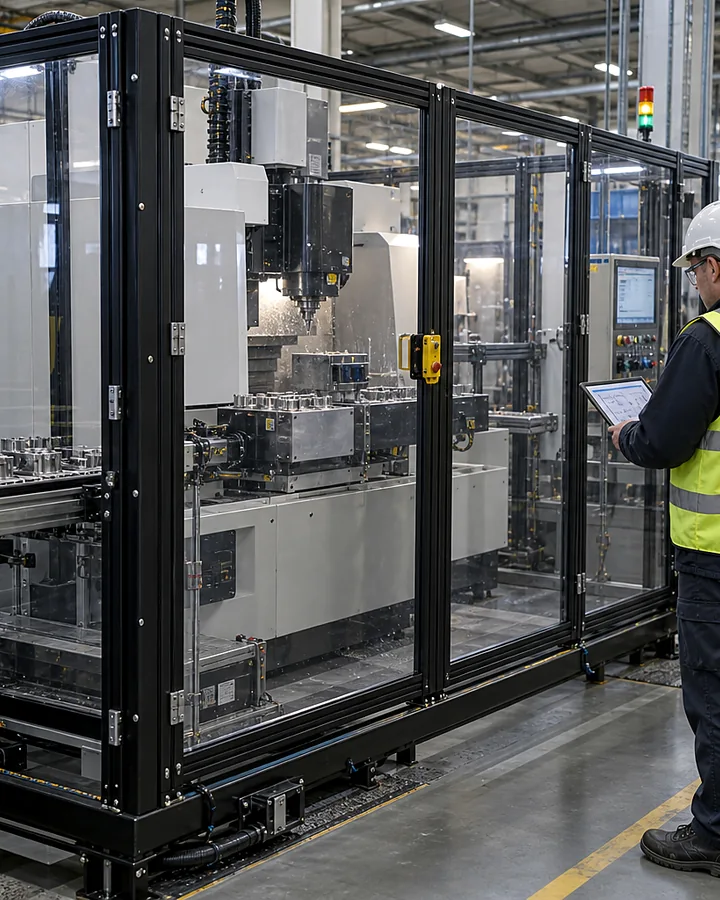
Person holding a hand tool beside a mesh and clear-panel machine enclosure.
Machine guarding and safety

Mixer Lids Hatches and Guards

Plan mixer lids hatches and guards around your machine hazards, operator tasks, access, stopping behaviour and validation evidence. Discuss a site-specific safeguarding concept with Oxford Machine Guarding.

Speak directly with Oxford Machine Guarding about mixer lids, hatches and guards.

Quick answer

How do we safeguard access to a mixer during operation and cleaning?

Map charging, sampling, discharge, cleaning and maintenance tasks around the vessel and drive. Record how lids or access points relate to moving parts and stopping behaviour. The safeguarding proposal should address each task and its control sequence, with validation of any changed access or restart functions.

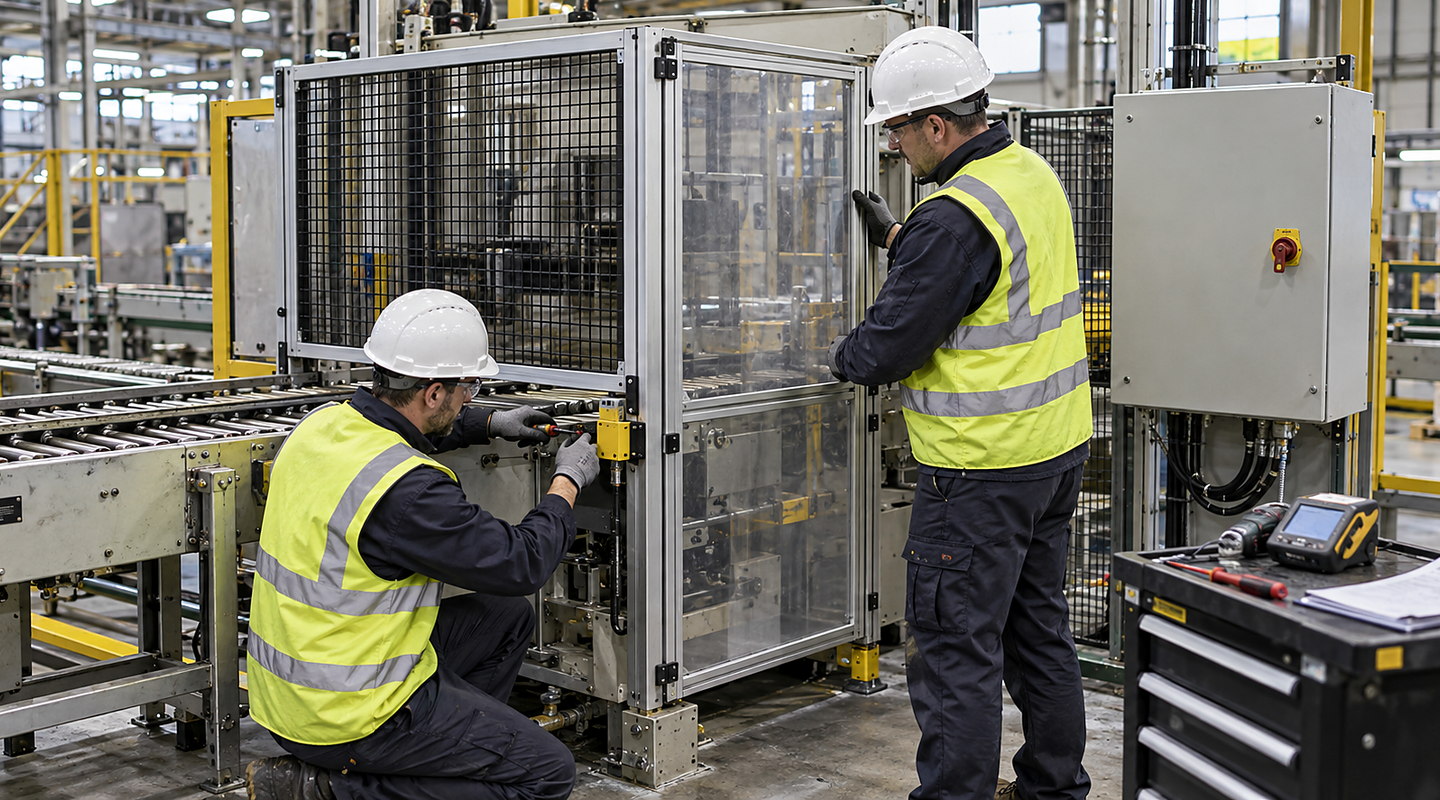
Person holding a hand tool beside a mesh and clear-panel machine enclosure.
Person holding a test meter beside a mesh machine enclosure.
Six useful questions

Describe what you need from mixer lids hatches and guards before choosing a solution

For safeguarding existing machinery for mixer lids, hatches and guards, share the normal condition, realistic range and difficult cases the finished system must handle.

Question 1

Hazards and Foreseeable Access for Mixer Lids, Hatches & Guards

For your initial enquiry about mixer lids hatches and guards, describe the current position, required outcome, acceptable limits and known exceptions for hazards and foreseeable access for mixer lids, hatches & guards. That lets us compare options against your real production rather than one nominal value.

Question 2

Machine Motion and Stopping Behaviour

For your initial enquiry about mixer lids hatches and guards, describe the current position, required outcome, acceptable limits and known exceptions for machine motion and stopping behaviour. That lets us compare options against your real production rather than one nominal value.

Question 3

Operating, Cleaning and Maintenance Tasks

For your initial enquiry about mixer lids hatches and guards, describe the current position, required outcome, acceptable limits and known exceptions for operating, cleaning and maintenance tasks. That lets us compare options against your real production rather than one nominal value.

Question 4

Existing Control-System Architecture

For your initial enquiry about mixer lids hatches and guards, describe the current position, required outcome, acceptable limits and known exceptions for existing control-system architecture. That lets us compare options against your real production rather than one nominal value.

Question 5

Space, Visibility and Operator Ergonomics

For your initial enquiry about mixer lids hatches and guards, describe the current position, required outcome, acceptable limits and known exceptions for space, visibility and operator ergonomics. That lets us compare options against your real production rather than one nominal value.

Question 6

Risk-Reduction and Validation Evidence

For your initial enquiry about mixer lids hatches and guards, describe the current position, required outcome, acceptable limits and known exceptions for risk-reduction and validation evidence. That lets us compare options against your real production rather than one nominal value.
Applications

Two useful starting points for mixer lids hatches and guards

The right choice changes with hazards and foreseeable access for mixer lids, hatches & guards, machine motion and stopping behaviour, your line layout and required results.

What happens next

Your route from an initial enquiry to a working solution

You can review decisions about space, visibility and operator ergonomics and risk-reduction and validation evidence at each stage.

  1. 01

    Survey the Machine, Tasks and Existing Safeguards

    Share the machine, operating tasks and access requirements, including the normal range for hazards and foreseeable access for mixer lids, hatches & guards and the difficult machine motion and stopping behaviour cases.

  2. 02

    Review Risks and Agree the Safeguarding Concept

    Compare suitable methods and use focused trials to show how each option performs against operating, cleaning and maintenance tasks.

  3. 03

    Detail, Install and Control the Modification

    Connect the equipment to your line, services and controls while resolving existing control-system architecture for day-to-day operation.

  4. 04

    Inspect, Test and Document the Agreed Safety Functions

    Confirm space, visibility and operator ergonomics, then complete and record risk-reduction and validation evidence before your operating team takes over.

Important limits

Know what needs a separate check

Your final solution for mixer lids, hatches and guards must reflect the law, current standards and site-specific risks that apply to your installation.